
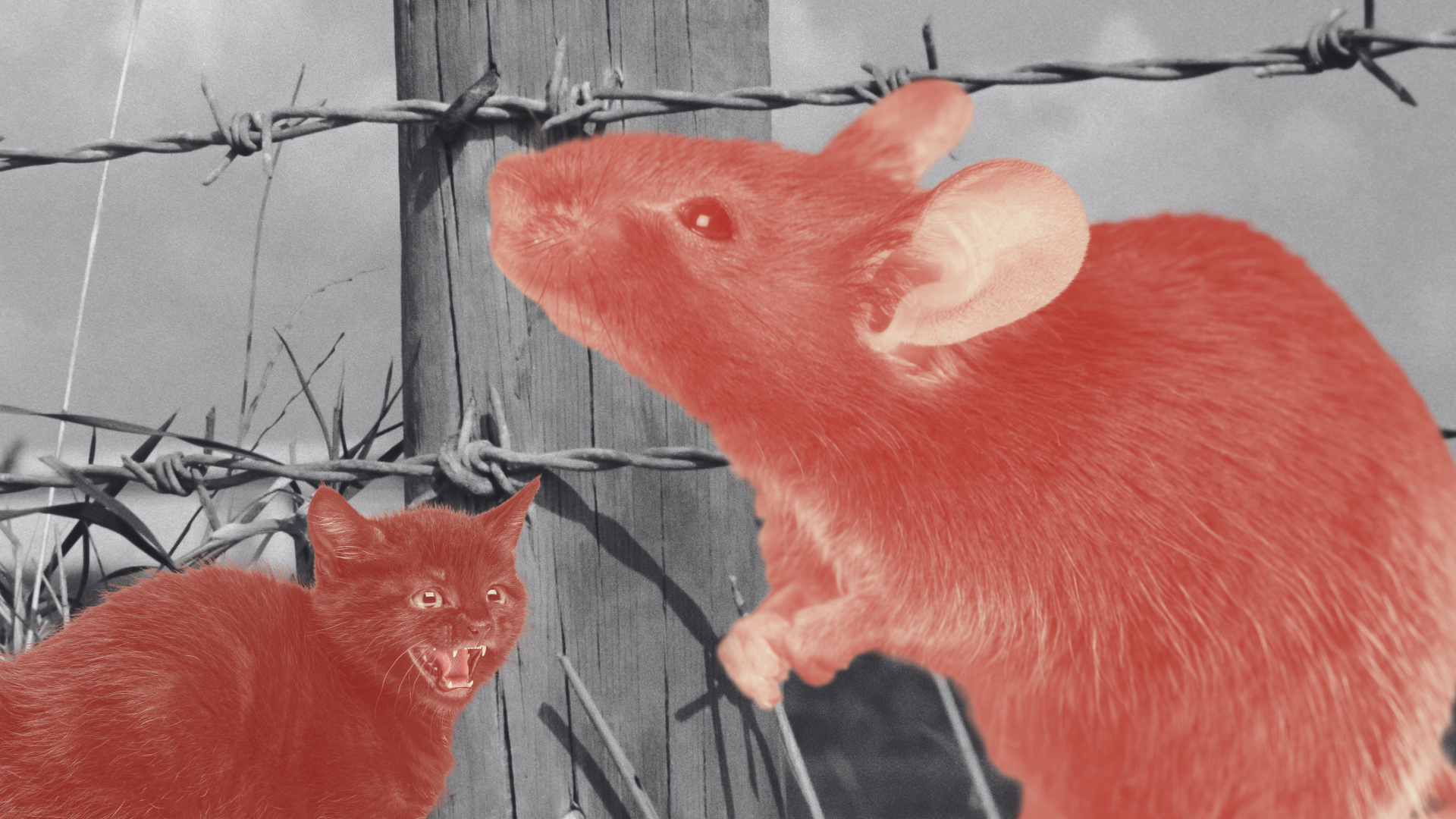
Jail Time Records is a prison documentary where no one is truly powerless. It’s where the bird flies over the barbed wire, where music is made and in one character’s words, it’s “where the mouse eats the cat”. The film takes place in Cameroon, where hundreds of men are crammed into the open air New Bell prison, documenting how the creation of music has helped inmates cope with their imprisonment. Following larger than life protagonists, at points you almost forget that they’re not free.
Directed and produced by Steve Happi and Dione Roach, the film feels deeply personal. Happi was formerly imprisoned at New Bell, where he met his co-director, Roach, who was working with activist groups. Together, they founded Jail Time Records. The film itself is not a documentation of the founding of the studio, but rather a documentation of the people whose lives it changed. As you are led through the narrative by a stylish narrator (nicknamed the Captain), you meet three characters: Stone, Emperor and Transporter. Stone is deeply serious in his music, contrasted by the happy go lucky Transporter. The Emperor is a force to be reckoned with, powerful within the prison social hierarchy. The documentary showcases a wide range of personalities. The directors’ connection to the story and unique access can be seen throughout the film, in the comfortable way these men speak to the camera. It often feels like watching a conversation between friends, instead of a documentarian and an interviewee. With carefully crafted vérité scenes, the film feels honest and real.
Contrast is what makes Jail Time Records truly explosive. The film has a kinetic energy to it. There is a constant flip between moments of extreme triumph and moments of quiet misery. A concert, packed with people dancing and cheering. Hands, reaching through the prison bars to greet family members. Laughing in the studio. Gorgeous murals. A face, looking out through the hole in the wall of a solitary confinement cell. Even weeks after watching the film, these striking visual moments are burned into my brain. The filmmakers somehow made a prison look incredibly beautiful. The film has almost a regal quality to it. It feels like being pulled into a strange fairytale, complete with a bard (Narrator), a king (Emperor), a knight (Stone) and a jester (Transporter). Everyone holds their head high in this film. There’s a dignity to it. For men who’ve seemingly had everything taken from them, the film instead argues that there is one thing that can never be taken away: the ability to create and enjoy art.
The film unites the viewer and the inmate through this universal human love of art and music. It almost feels meta: you’re watching and enjoying art about people creating and enjoying art. Through the songs and dance, the film excels at humanizing complex people who are stuck in dehumanizing conditions. Transporter has a girlfriend he hopes to one day see again. He writes songs about her. Stone has a daughter he wants to return to. His daughter loves music too. This film transcends both the music documentary and prison documentary and instead brings something entirely new, raw and powerful. At its core, Jail Time Records is a musically driven story about the indomitable human spirit.
Image Credit: Created on Canva by author.