
I moved to Los Angeles in the summer of 2023. With 2026 drawing to a close and a trip back to the UK on the horizon, I sat down to watch what will most likely be national treasure Mike Leigh’s final film, Tender Loving Care.
The film opens with a close-up on the eyes of an elderly man holding an unyielding gaze through wiry eyebrows. The scene that follows takes place in a familiar, understaffed and overstretched NHS hospital in West London. It wasn’t long before I started to feel myself coming down with something. An ache formed in the pit of my stomach; with each scene that followed, it crept up to the back of my throat, until by the end of the film it was stinging behind my eyes, forcing quiet tears to fall down my cheeks.
I left the cinema and walked to my car, trying to identify this sickly feeling inside me. I started the engine and put my address into Google Maps, as I stared at the red line stretching the four miles down the 101 South from Hollywood to Echo Park I realised something: I was homesick. This feeling is one I have proudly and steadfastly avoided over the last three years. I have been doing everything in my power to evade such sickness, using all the skills of suppression, avoidance, and compartmentalisation that have been passed down to me by my fellow countrymen. With Kate O’Flynn’s rendition of ‘The Great Pretender’ still ringing in my ears, I started to feel embarrassed that I was no better than a red tea towel flogged to tourists in Leicester Square and that maybe all this keeping calm and carrying on had made me a great pretender.
“Oh, yes, I’m the great pretender
Pretending that I’m doing well
My need is such, I pretend too much
I’m lonely, but no one can tell”
(The Great Pretender (Freddie Mercury’s cover!), The Freddie Mercury Album, 1987)
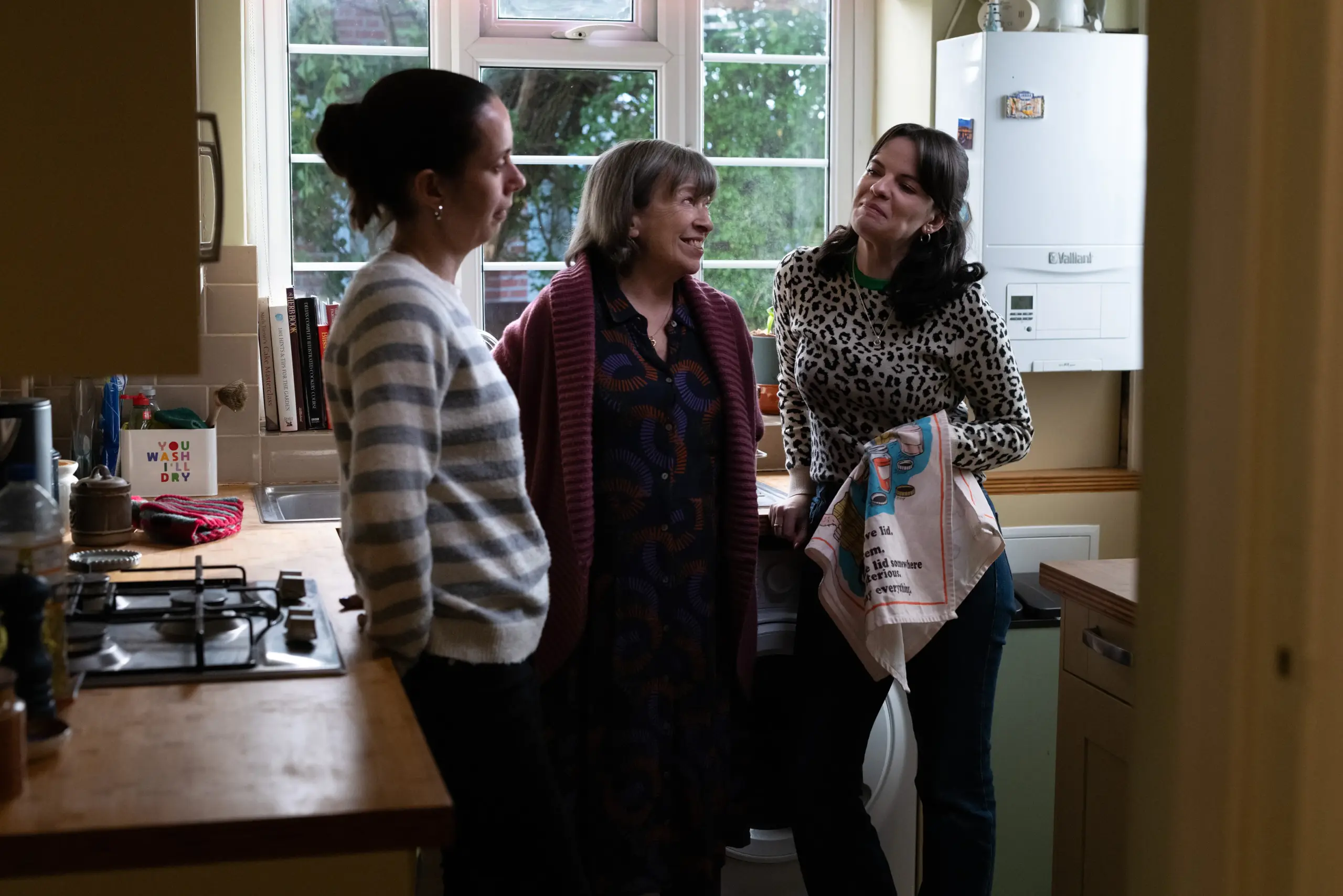
My best friend is a social worker and has recently reached a point of burnout that has made her job unsustainable. I’ve been watching her try to persevere through the crushing setbacks and turmoil that come with working within a truly broken system. Watching Alice Bailey Johnson and Kate O’Flynn’s heartwarming sisterly dynamic reminded me that I haven’t really been able to care for my friend as she’s been navigating this huge change in her life. I haven’t been able to be there after a maddening day, crack open a bottle of wine, dance around the living room, talk about silly, inane things in the face of something too serious, or simply sit with her in silence. I am missing these everyday moments in her life. I am missing her.
I will be going back to London in a week’s time, mainly to celebrate my grandmother’s 90th birthday and her 70th wedding anniversary with my grandfather. Marion Bailey and Paul Jesson beautifully capture the intuition and oneness that forms when you dedicate yourself to spending a lifetime with another person. I am already preparing for the anxiety I will feel when I leave London, not knowing when I will next see my grandparents.
These feelings that the film has drawn out in me are amplified by the fact that this will be the last time I will sit in a cinema watching a new Mike Leigh film. His career has been defined by how tenderly he holds the audience in the world of his stories, how lovingly he depicts his characters, and how carefully he tackles even the most challenging subject matter.
Many have been referring to Tender Loving Care as Mike Leigh’s swan song. In his madrigal, ‘The Silver Swan’, Orlando Gibbons gave lyrics to the swan’s final song: “Farewell, all joys! O Death, come close mine eyes! More Geese than Swans now live, more Fools than Wise.” In a world of more geese than swans, Mike Leigh is one of the wise. He possesses a profound wisdom about what it means to be human that he has spent a lifetime translating into cinema, and his final film is no exception. Watching Tender Loving Care in a room full of young filmmakers in Los Angeles filled me with joy and a hope that his messages, his methods, his humanity, his love will live on and inspire a new generation of filmmakers.