
Now we’re all connected, so why hasn’t it solved all our problems? These are the questions asked in Yeon Sang Ho’s Colony. Through an ensemble of zombie apocalypse survivors, the film criticizes modern forms of communication, questioning whether our new ways to connect have driven us further apart. With specific moments feeling ripe with anxiety surrounding AI, the main horror in Colony is a loss of identity through complete unification.
Zombies aren’t new, but these protagonists are more pragmatic than the average victim. They make a group chat to keep in contact, which is something other horror ensembles always neglect to do. Refreshing, right? The group chat doesn’t help them much, but it’s the thought that counts. In Colony, the way characters connect is a matter of life or death.
Much like in Train to Busan, every character in the ensemble acts as a stand-in for social commentary. The antagonist, Seo Young-cheol is an overly ambitious young biotech genius hoping to connect the world in a hive mind and prevent all betrayal, disability and miscommunication. He reads like a mix between the CEO of an AI company and a Batman villain. The protagonist Kwon Se-jeong is a brilliant professor who is looking for a new job after offending her previous employer, unable to contain her brutal honesty. She is outdated; that’s why she succeeds. Choi Hyun-seok is a security officer trying to save his disabled older sister, Choi Hyun-hee from the zombies. They are the every-man, the folk heroes. The rest of the bunch includes some non-descript student characters, who all hate one another and represent the youth, as well as a cop character who represents exactly what you think he represents.
The film starts with an outbreak of a disease unleashed by Seo Young-cheol, who calls 911 to report his own terrorist attack. He proclaims later on to his former boss that his invention will create a collective intelligence that will connect people into one, so there will be no more betrayal, heartbreak, deceit or even disability, claiming his virus can even cure those who are physically disabled. To the shock of no one, he infects his former boss after delivering this verbal manifesto. Kwon Se-jeong is sharing a last meal with her ex-husband in the shopping mall in the lower floors of the tower where the conference took place. As the infection spreads and kills her ex-husband, she must band together with the aforementioned group of survivors to make it out alive, employing a variety of smart tactics that capitalize on the zombie’s ant-like behaviors.
Notably, all the action for most of the film is contained inside a corporate tower, complete with a mall. A mall is the perfect choice for the themes of the film, since it’s an soon-to-be-outdated place built for human connection that is not dissimilar to an ant hill. The mall automated closing time announcements add a spooky punctuation to scenes of zombies roaming the shops, covered in blood.
Throughout the carnage that ensues, forms of communication are intercepted by the creatures. Text messages are read by the infected, mall intercom systems are used to give away the character’s positions, and walkie radios stop working. There is a pivotal scene where the two college girls mishear a voice through a door, claiming to be the rescue team. It is the infected and they meet their demise, when one of the students is infected and turns on the other one, brutally biting her. The scene feels indicative of the director’s fears of technologically spread misinformation targeting young people. The only communication that works in the film is old school phone calling and face to face conversations. Value is placed on how human an interaction is and relying on technology is fatal for the protagonists.
Disability and conversations around AI are intertwined in this story. Beyond the physically disabled character, who uses a wheelchair, there is also a sign language interpreter in the news coverage of the infection. The film asserts that collective intelligence (in other words, AI) does not make the world more accessible. The disabled character is perfectly able to function in her reality, until the infection spreads and she is taken over by collective intelligence. It brings to mind conversations around the accessibility of “AI art” when disabled people have been making art for centuries. This character acts as a physical manifestation of this issue, able to walk after being infected. But she’s worse and she’s not herself. She’s not better. Colony rejects the idea that artificial intelligence is beneficial to the disabled and instead shows you how it’s damaging, “solving” issues that were never issues to begin with.
The film is wildly emotional despite a lot of the hard hitting scenes being between two characters on phones. While this typically is a let down for me, I loved how the theme of communication was explored through the emotional weight of a phone call. It’s the simplest form of technological connection and the film asserts that simple, direct communication is valuable, now that we have so many convoluted ways to stay connected. In a powerful scene, two characters say goodbye to each other on a phone call, before one is killed by a horde of zombies. For such an action packed film, the characters spend almost every pivotal moment on the phone.
However, for every minute they spend calling one another on the phone, there are equal amounts of awesome zombie carnage. Whatever your taste, you can find something to chew on in Colony. Or, you can watch people get chewed on in Colony.
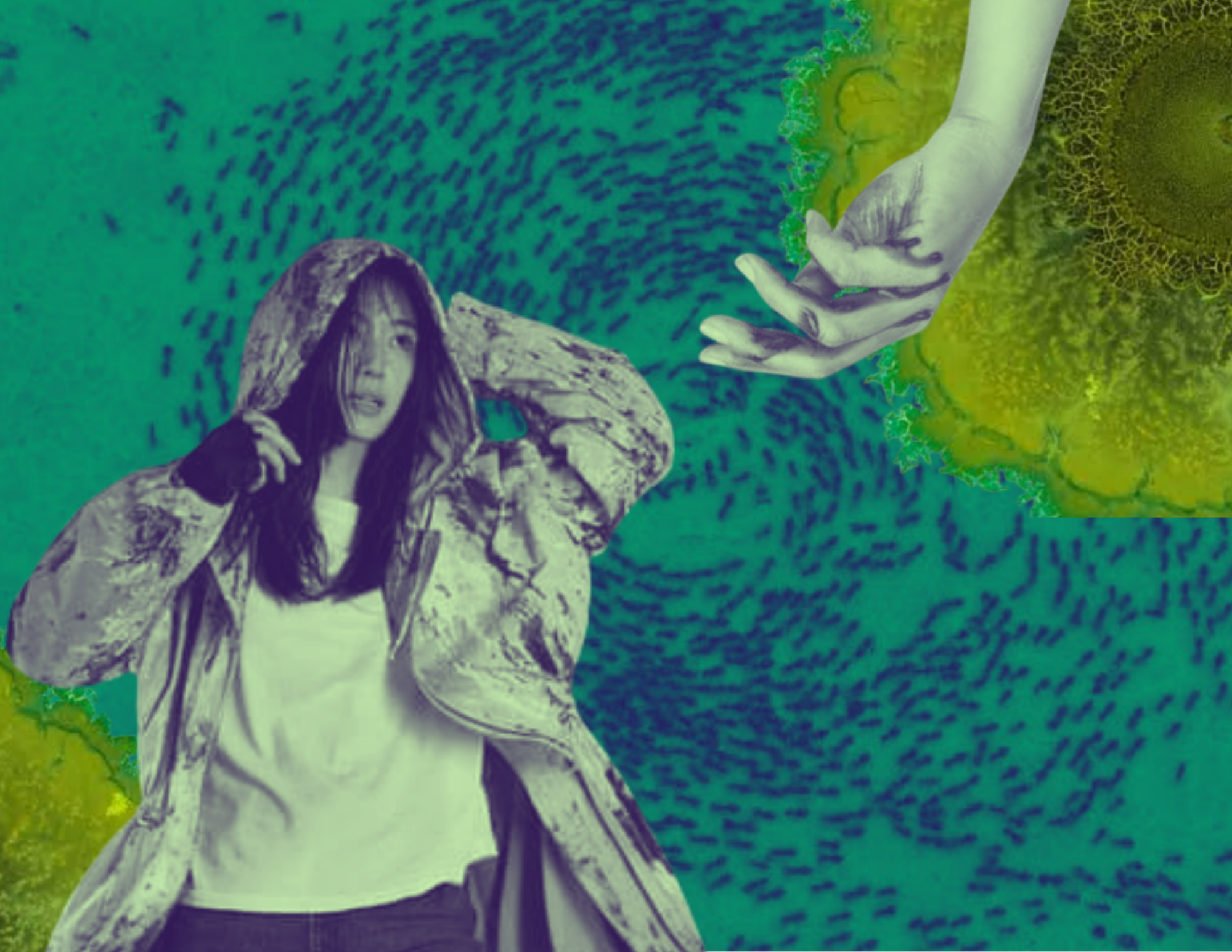
(Collage Above Designed by the author in Canva.)